
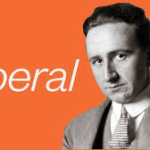
“The curious task of economics is to demonstrate to men how little they really know about what they imagine they can design” – F.A. Hayek
F.A. Hayek (May 8, 1899-March 23, 1992) was an Austrian-born British economist and philosopher. He is known for his contributions to political economy, political philosophy and intellectual history. Hayek shared the 1974 Nobel Memorial Prize in Economic Sciences with Gunnar Myrdal for work on money and economic fluctuations, and the interdependence of economic, social and institutional phenomena.
During his teenage years, Hayek fought during World War I as an artilleryman in the Austro-Hungarian Army on the Italian front. He suffered damage to his left ear and was decorated for bravery. He earned a doctoral degrees in law in 1921 and political studies in 1923 from the University of Vienna. Between 1923 and 1924, Hayek worked as a research assistant to Professor Jeremiah Jenks of New York University, compiling macroeconomic data on the American economy and the operations of the Federal Reserve.
Hayek’s most enduring work is his scathing criticism of Socialism in The Road to Serfdom, 1944.
By contrast, “Mullah” Zohran Mamdani has a degree in “Africana Studies” from Bowdoin College.
From the spirit world, Hayek has been observing New York City’s slow slide to Gomorrah culminating in the probability of a “Democratic” Socialist becoming the next mayor. Hayek decided to return through the veil and counsel the young Mamdani about the error of his ways:
Hayek: “Well, Zohran, for such a young man with so little – and irrelevant – education and experience you seem quite sure of yourself as a “Democratic” Socialist.
Mamdani: “Who are you?”
Hayek: “Let’s just say I’m the ghost of Economic Reality – past, present and future.”
Mamdani: “What do you want with me?”
Hayek: “I’m here to warn you against making a giant mistake guaranteed to ruin the lives of millions of people.”
Mamdani: “How’s that?”
Hayek: “Your wrong headed conviction that “Democratic” Socialism is the panacea for the ills plaguing New York City.”
Mamdani: “Oh, I don’t need your input on that. I know what I’m talking about.”
Hayek: “You are too young, ignorant and inexperienced to know what you are talking about. You bring to mind a quote from Dostoyevsky’s novel The Idiot – “You can be totally convinced and still be completely wrong.” You’re what Posner calls a Public Intellectual who has opinions on things of which you are actually a complete and total idiot (see: Posner’s Public Intellectuals: A Study of Decline, 2001). But don’t feel too badly, you’re not alone. Every metrosexual New York City-bred talk radio or TV host on both sides of the political spectrum and their guests suffer from the same swelling of the ego.
That’s why I dedicated my book to “The Socialists in Both Political Parties.”
Mamdani: “Well, if you’re so smart, tell me why I’m wrong thinking Socialism can cure the ills of a corrupt capitalist society.”
Hayek: “Thanks! I was hoping you’d ask! That’s the first step toward recovery! First of all, real democracy extends individual freedom. Socialism restricts it. Democracy values each individual’s freedom to choose; socialism turns individuals into mere numbers and considers free choice abhorrent. Democracy and socialism have nothing in common but one word: equality. But while democracy seeks equality in liberty, socialism enforces equality through restraint and servitude.
French historian Alexis de Tocqueville observed that the search for greater equality typically is accompanied by greater centralization of government and a corresponding reduction in liberty. He called socialism “the new kind of servitude” where “The will of man is shattered; men are restrained from acting independently. Socialism destroys, it cannot create. It suppresses existence; it tyrannizes, enervates, extinguishes and stupefies a people, till each nation is reduced to nothing but a flock of timid and industrial animals, of which government is the shepherd.”
Socialism means the nationalization of the means of production, the centralization of economic planning and the forced redistribution of wealth through seizure of personal property through taxation and the requirements of the Welfare State. The founders of socialism believe freedom of thought is the root-evil of society. The first socialist planner, Saint-Simon, predicted those who did not obey his proposed Planning Boards would be “treated as cattle” and, everywhere socialism has been implemented, they were.
And let’s drop this pretense that Socialism and communism are different. They aren’t. You are too young to remember that the official name of Russia under communism was the Union of Soviet Socialist Republics.
American Max Eastman, Lenin’s old friend, finally admitted “instead of being better, Socialism is worse than fascism, more ruthless, barbarous, unjust, immoral, anti-democratic. Stalinism (communism) is Socialism.”
W.H. Chamberlain, an American correspondent who spent twelve years in Russia, reported “Socialism does NOT pave the road to freedom, but to dictatorship and counter-dictatorships. Socialism belongs to the world of utopias.”
Walter Lippman observed “the generation to which we belong is now learning from terrible experience what happens when men retreat from freedom toward a coercive organization of their personal affairs. Though they (Socialists) promise a more abundant life, they in reality renounce it. As the centralized Planning increases, free choice gives way to uniformity. That is the nemesis of a planned society.”
Mamdani: “What ever! You’re talking history not today. I don’t know this de Tocqueville or any of these other guys you are talking about. I’m giving the voters of New York City a fresh approach to prosperity and I’m leading in the polls by 20%.”
Hayek: “Yes, I am talking history – very recent history; history consisting of thought processes that morphed from the largesse of the nanny state to socialism to totalitarianism – the exact same political and economic Plan New York City politicians have been implementing for the last thirty years. The socialism you are espousing is not new. It has been tried and failed for almost two hundred years.
“History is the story of what led up to now. Read a history not only to learn what happened at a particular time and place in the past but to learn the way men act at all times and at all places – especially now.” – Mortimer J. Adler, How to Read a Book, 1972; 426 pages.
“The laws of History are as immutable as the laws of Physics.” – Isaac Asimov
“Jeffrey Goldberg, national correspondent for The Atlantic magazine, asked Fidel Castro if Cuba’s economic system was still worth exporting to other countries. Castro replied “The Cuban Model doesn’t even work for us any more.” Goldberg said Castro made the comment off-handedly over lunch after a long talk about the Middle East and did not elaborate. Fidel’s brother Raul has said the same thing repeatedly.
The Cuban government controls well over 90 percent of the economy, paying workers salaries of about $20 a month in return for free health care and education, and nearly free transportation and housing. At least a portion of every citizens’ food needs are sold to them through ration books at heavily subsidized prices.
President Raul Castro has warned Cubans they need to start working harder and expecting less from the government. He also has made it clear he has no desire to depart from Cuba’s Socialist system.” – (Arizona Daily Star, Thursday, September 9, 2010; Associated Press).
“That Democratic-Socialism, the great utopia of the last few generations, is not only unachievable, but to even strive for it produces something so utterly disastrous that few of those who now wish it would be prepared to accept the consequences.” – Hayek, The Road to Serfdom, p. 82
If you are elected mayor, New York City will become the Havana of America.
Read:
The Road to Serfdom by F.A. Hayek, 1944; 236 pgs.
The Black Book of Communism: Crimes, Terror, Repression by Stephane Courtois, Nicolas Werth, Jean-Louis Panne’, Andrzej Paczkowski, Karel Bartosek, and Jean-Louis Margolin; 1999; 757 pgs.
Seeing Like a State: How Certain Schemes to Improve the Human Condition Have Failed by James C. Scott, 1998; 357 pages. “The physical environments Le Corbusier designed and built had, as did Brasilia, an overall harmony and simplicity of form [uniformity]. However, they failed in important ways as places where people would want to live and work.” p. 133.
The Socialist Tragedy by Ivor Thomas

